
Spider
Local record
Keep the rhythm of every deal
0
Wins
—
Best time
—
Fewest moves
Cleared deals
This record lives in the current browser only. There is no account, and nothing is synced to another device. Clearing site data, or the button below, removes it.
This cannot be undone. Clear the record stored in this browser?
A legal move is not the same as a winning move
Spider is not hard because the rules are hard. It is hard because every move has to leave you another move. Two decks are spread across ten columns. Any suit can build down by rank, but only a same-suit descending run can move as a unit; an empty column gives you room, but it also blocks the stock; and a same-suit King-to-Ace sequence clears on its own. The hands that get away from you usually do so because the low cards surface too late, the empty column gets spent too early, or the same-suit lane gets buried by your own move.
Four questions before you move
Which low card should I free first?
Start with the buried Aces, twos, and threes. Spider often collapses not because the board looks dead, but because the low cards never came out in time to build a same-suit lane.
Is this move making a lane, or just cleaning the surface?
A move can be legal and still be empty. Favor lines that straighten a same-suit run you can move later, not lines that merely make the columns look tidier.
Which column is closest to empty?
Clearing one column is often worth more than adding a few extra cards to a stack. It gives you room to park blockers and rebuild a cleaner route, as long as you fill it before the next deal.
Does this stock deal push the hand forward, or seal it shut?
Every stock deal drops one card on every column. If your same-suit run still has no safe landing spot, the next deal may not be progress at all. It may be the card that buries it.
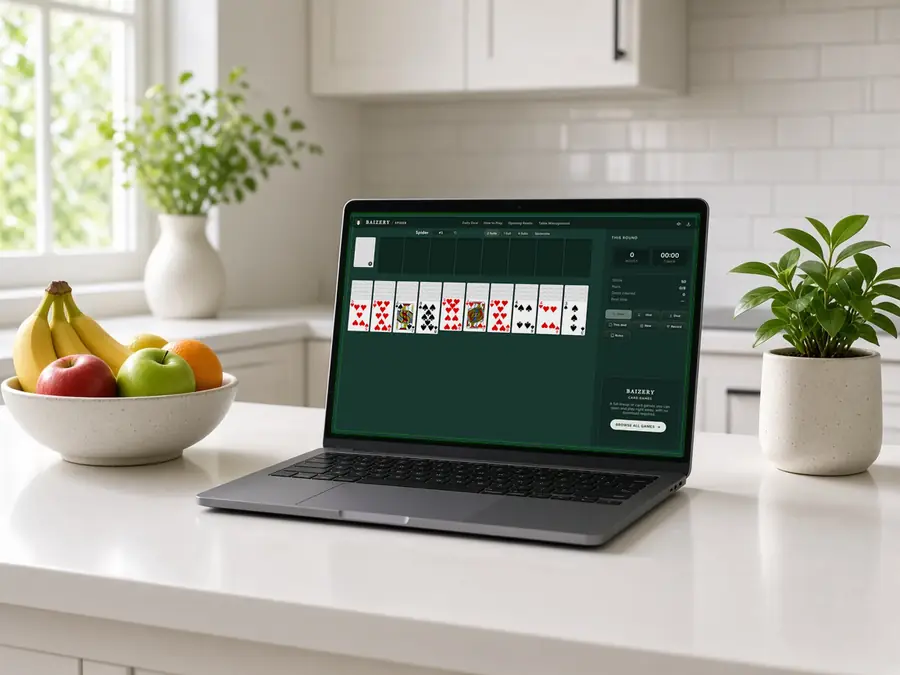
Free the low cards first
Open by finding where the Aces, twos, and threes are buried, then count what has to come off before they surface. If two moves both work, take the one that frees a low card and also shortens a column. Many losing hands are not lost on move one. They are lost because move one buried the low cards even deeper.
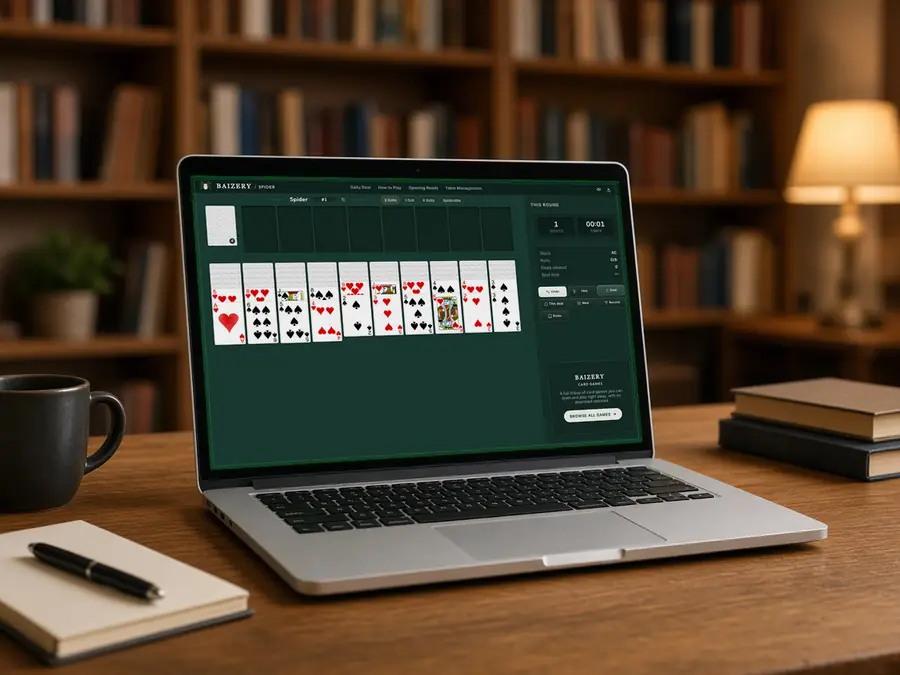
Same-suit runs are the real currency
One of Spider's oldest traps is a board that looks orderly but is really being held together by mixed suits. Those long mixed stacks do not travel, and they do not protect the next move. What matters is a same-suit run you can lift, land, and reuse.
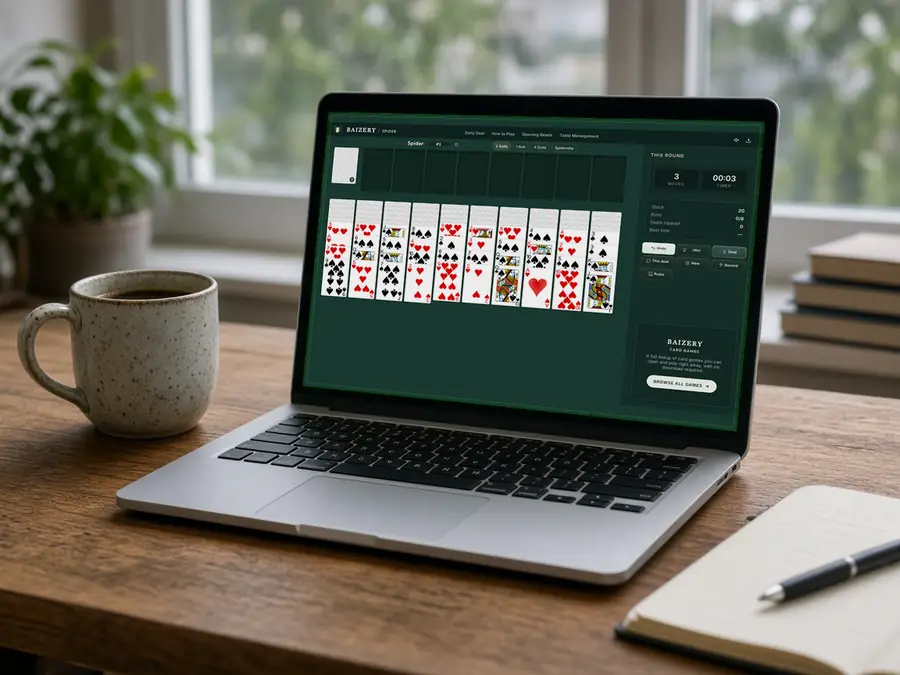
An empty column is your maneuver budget
Once you clear a column, do not rush to throw the next convenient card into it. That space is what lets you split mixed suits, park a key run, and rebuild the route. But if you still need another stock deal, remember that the same space has to be filled first.
Free low cards firstBuried Aces, twos, and threes usually matter more than a stack that only looks cleaner on top.
Value same-suit runsA same-suit run you can move intact is worth more than a long mixed stack.
Treat empty columns as budgetUse the space to solve a blockage. Do not burn it the moment it appears.
Check again before you dealMake sure every column is filled, then ask whether the next card will bury a same-suit lane you still need.
Frequently Asked Questions
How is Spider actually different from Klondike?
Klondike leans harder on draw order and waste-pile rhythm. Spider leans harder on whether same-suit runs stay movable, whether the empty column should be kept, and whether the stock should be dealt now or later. Many decisions live in the gap between a move that works and a move that is worth making.
Why can the board still lock up when I can technically keep stacking cards?
Because many legal moves only tidy the surface. If the suits keep mixing, the low cards stay buried, and the empty column gets spent too early, the hand loses working room even while the board still looks active.
Why does one mixed-suit join make such a difference?
Because building by rank is only the landing rule. It is not the movement rule. Only the same-suit descending slice at the face of a column can travel as a run. Once suits get mixed, you are usually back to peeling one card at a time.
Why won't the stock deal?
Because every column has to hold a card before the stock can fire. Fill the empty column first, then decide whether the next deal is actually pushing the hand forward or just sealing it up.
Should I trust Hint?
Hint reads the current position in your browser and scores legal column moves and stock deals locally. The first tap marks the origin and landing spot; the second tap plays that move. It is useful for checking whether the hand still has shape, but it is not proving that the deal can be finished.