
How to Play Spider
Spider does not ask you to memorize many rules. The hard part is keeping your next moves alive. Two decks spread across ten columns, any suit can build down by rank, and only a same-suit descending run moves as a unit. Empty columns create space, but they also block the next deal. The gap in win rate comes from knowing when to uncover low cards, when to protect a suit lane, and when to wait.
Get These Four Rules Straight, or Your Next Moves Die Early
Build down by rank
Any suit can land on a card one rank higher. A 7 can sit under any 8. What matters is not whether the move is legal in front of you, but whether the cards still move cleanly after you make it.
Move same-suit runs together
Building down by rank is only the landing rule. Moving a full run is different. Only a same-suit descending run can travel together. Once you mix suits, you usually have to peel it apart one card at a time.
Know when a run is really done
A same-suit King-to-Ace run clears on its own. Eight of those finish the deal. But being able to send cards away is not the same as doing it now. If that card is still holding the layout together, wait.
Empty columns are your real workspace
An empty column is not just a landing spot. It is a place to peel mixed suits apart, park a key run, and rebuild the layout. A lot of hard deals turn not because one more card clears, but because one empty column appears.
Four Places Players Most Often Spend Their Next Move
What should I look at first in the opening?
Start with the Aces, twos, threes, and the cards sitting on top of them. The sooner those low cards come out, the more landing spots and working room you usually get later. A lot of deals tighten because the low cards stay buried too long.
When should I break a sequence apart?
Break things apart when mixed suits are pinning down a same-suit run and you cannot move the full section anymore. Breaking a stack is not cosmetic. It is how you reconnect the suit, win back space, and keep the next move alive.
Why can a fully visible deal still die anyway?
Because Spider is not about hidden information. It is about running out of room to act. Once mixed suits pin down your same-suit runs and the empty columns are gone, you may know the right move and still have no way to reach it.
When should I back up early?
Back up early when a same-suit run is about to get sealed under the next deal, the key low cards are still buried, or the empty column you just won is about to disappear again. Undo is often the fastest way to get your working room back before the deal locks up.
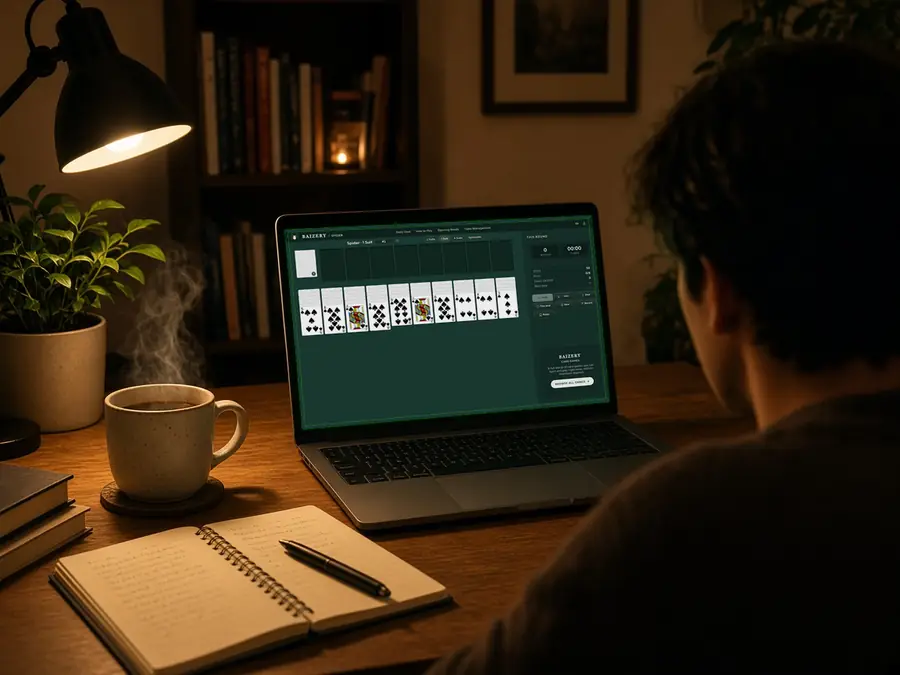
Turn over low cards before you chase long builds
Your first job is simple: bring out the Aces, twos, and threes as quickly as you can. The sooner those low cards show, the more landing spots and working room you usually get later. Chase a long build too early and the layout can look tidy while the key cards stay trapped underneath.
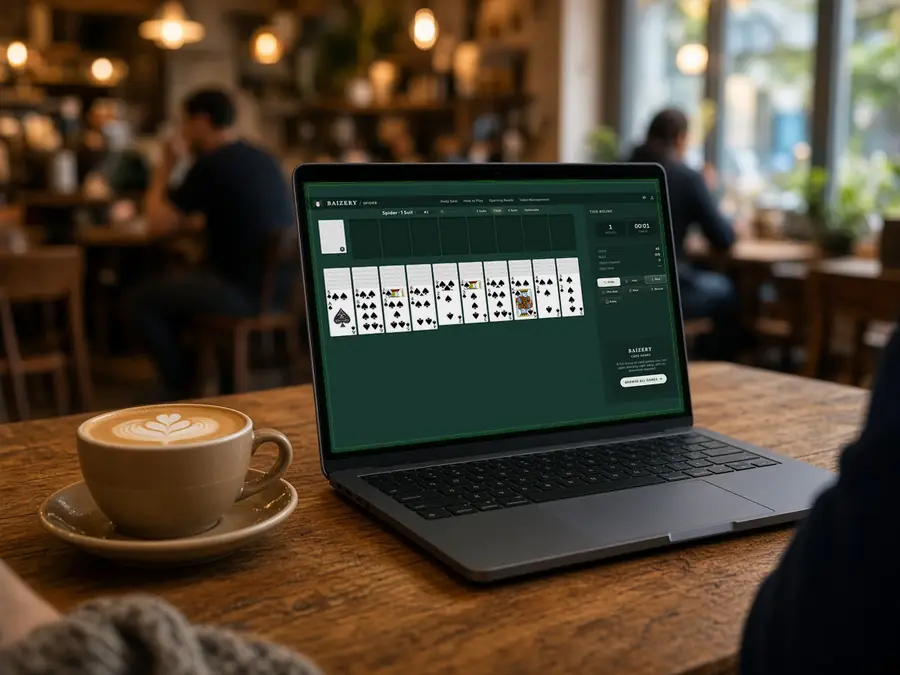
Protect the suit run, spend the empty column slowly
A same-suit descending run is your real transfer lane. The longer mixed suits get, the harder the layout is to unwind. Empty columns are hard to win and easy to waste, so every time you clear one, think about whether the next deal seals your best run in.
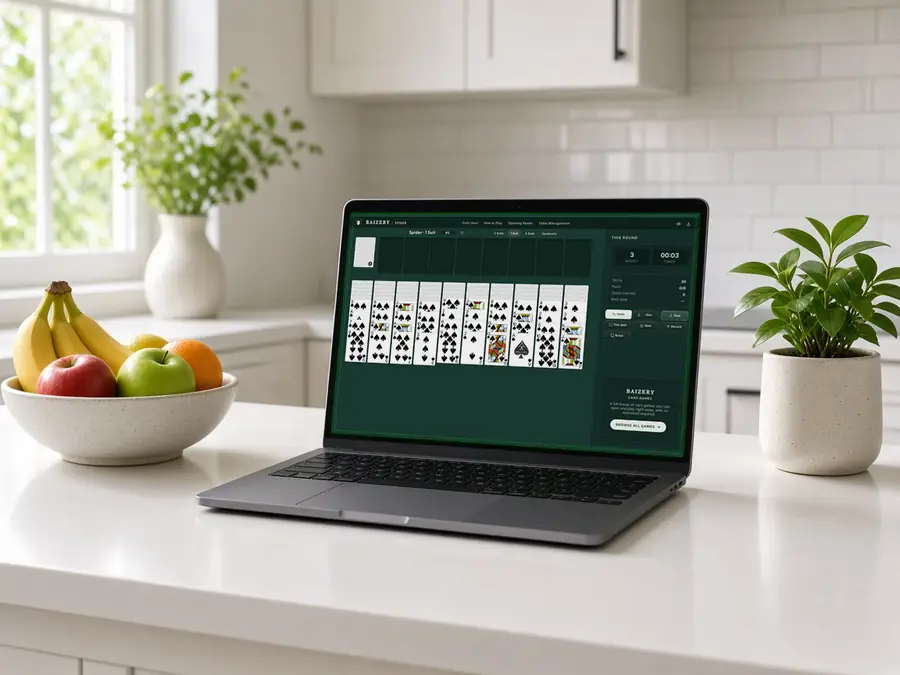
When the layout tightens, fight for the empty column
The middle and late game often turn not on one more card cleared, but on one more empty column. An empty column can catch a full ordered run or let you tear down and rebuild a whole area of the layout. When things tighten, start by asking which column is closest to clearing.
Run Through These Six Checks Before You Move
Start With the Low CardsDoes this move uncover an Ace, two, or three, or at least bring one of them closer to the surface?
Then Check the Landing SpotOnce this card moves, where is the next move supposed to land? If there is no landing spot after this, the move is probably just delaying the problem.
Keep Working Slots OpenDo not leave a column empty and then rush the stock, and do not refill a newly cleared column unless that move buys you a same-suit run.
Trade for Empty ColumnsThe value of one full empty column is usually greater than the value of a small local cleanup.
Ask About Foundations LastBeing able to send a card home is one question. Whether you should do it now is another. First check whether it breaks an important landing relationship in the columns.
Check Whether You Can Undo ItIf this move turns out to be wrong, do you still have room to back up and rebuild? The less reversible a move is, the more slowly you should treat it.
Common Questions in Real Play
What is the actual goal in Spider?
Clear eight same-suit King-to-Ace runs from two decks. Once all eight runs leave the layout, the deal is over. The goal is simple. The challenge is getting there without spending all your suit lanes and empty columns too early.
Why do other players beat deals that keep killing me?
Most of the time it is not a rules problem. It is an order problem. Low cards stayed buried, key landing spots were not protected, or an empty column got spent too early, and the layout narrowed with every move.
How many cards can I move at once?
Not as many as you want. The answer depends on whether the front of that stack is one suit in proper order and on how many empty columns you still have. The cleaner the run and the more space you keep, the more cards move together.
When is it better to do nothing than to force a move?
If the move does not uncover a key low card, does not help you clear a column, and costs you the last empty column or seals a same-suit run under the stock, it is usually not worth forcing. A lot of losing lines come from two unnecessary moves, not from one missing move.
Should I always send an Ace or a two home right away?
Usually it is right to do so early, but not mechanically. If that card is still acting as an important landing spot in the layout, check first whether moving it home will strand something more important. Progress is good. Cutting off your next move is not.
Which matters more, an empty column or a long suit run?
Both matter, but in the middle and late game the empty column is usually worth more. A long suit run gives you clean movement. An empty column gives you a whole area to rebuild the layout.
What habit narrows the table fastest?
Playing every legal move as soon as you see it. A better habit is to ask what the move is for before you make it: uncovering a key card, clearing a column, protecting a landing spot, or simply making the layout look cleaner. If the answer is mostly cosmetic, the move is usually not urgent.
Read the Rules, Then Put Them to Work
Make These Two Checks Automatic
Before every move, check whether it uncovers a low card. Before you deal from the stock, know whether a same-suit run is about to get sealed. Once those two checks become automatic, a lot of tight deals start loosening on their own.
Keep Reading
Read the opening page first, then the midgame page, then go back home and run the same order against a live deal.